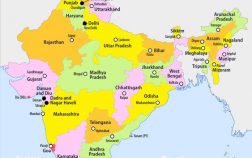
India is one of the largest and most diverse countries in the world, covering an area of 32,87,520 sq. km with a population of over 1.4 billion. Due to its vast size and diversity, India is administratively divided into 28 states and 8 union territories.
Among these regions, the North States of India hold special importance because of their historical significance, geographical diversity, cultural richness, and political influence.
In this detailed, SEO-friendly guide, you will clearly understand which are the North States of India, along with their geography, history, culture, rivers, capitals, and importance.
What Are the North States of India?
The North States of India generally refer to the states located in the northern part of the country. These states are influenced by the Himalayan mountain ranges, fertile river plains, deserts, and ancient civilizations.
List of Major North Indian States of India
The commonly accepted North States of India are:
- Himachal Pradesh
- Punjab
- Uttarakhand
- Uttar Pradesh
- Haryana
- Rajasthan
(Some definitions may also include Delhi and Jammu & Kashmir, but this article focuses on the core North Indian states.)
Himachal Pradesh – The Dev Bhoomi of India

Himachal Pradesh is one of the most beautiful North States of India, located in the north-western Himalayan region.
Key Facts About Himachal Pradesh
Capital: Shimla
Nickname: Dev Bhoomi (Land of Gods)
Mountain Range: Shivalik and Greater Himalayas
Himachal Pradesh has deep historical roots, with Aryan influence dating back to the Vedic period. It is famous for hill stations, temples, snow-capped peaks, and scenic valleys.
Major Rivers
Satluj
Beas
Ravi
Chenab
Tourism plays a vital role in Himachal Pradesh’s economy.
Punjab – The Land of Five Rivers

Punjab is one of the most culturally rich North States of India, known for agriculture, bravery, and Sikh heritage.
Key Facts About Punjab
Capital: Chandigarh (shared with Haryana)
Religion: Only Sikh-majority state in India
The word Punjab comes from Persian words Panj (five) and Ab (water), meaning Land of Five Rivers.
Major Rivers
Sutlej
Beas
Ravi
Chenab
Jhelum
Religious Importance
The holiest Sikh shrine, Golden Temple, is located in Amritsar.
Uttarakhand – The Land of Gods and Rivers

Uttarakhand is one of the youngest North States of India, formed in the year 2000.
Key Facts About Uttarakhand
Capital: Dehradun
Former Name: Uttaranchal
Borders: Tibet (China), Nepal, Himachal Pradesh, Uttar Pradesh
Uttarakhand is extremely important for Hinduism as it is home to sacred places like:
Gangotri (origin of the Ganga)
Yamunotri (origin of the Yamuna)
Kedarnath and Badrinath
Tourism, pilgrimage, and natural beauty define this state.
Uttar Pradesh – The Heart of North India

Uttar Pradesh is the most populous among the North States of India and holds immense political and historical importance.
Key Facts About Uttar Pradesh
Capital: Lucknow
Population: Highest in India
Uttar Pradesh is considered the birthplace of ancient Indian civilization, where Aryans settled and Vedic culture flourished.
Historical & Political Importance
Birthplace of Lord Rama and Lord Krishna
Home to Varanasi, Ayodhya, Mathura
Major political influence in India
Gorakhpur hosts one of the largest railway junctions in India.
Haryana – The Land of Mahabharata

Haryana is a prominent North State of India, surrounding the national capital region.
Key Facts About Haryana
Capital: Chandigarh
Historical Site: Kurukshetra
The legendary Mahabharata war was fought in Kurukshetra, making Haryana historically significant.
Origin of the Name
Hari (Lord Vishnu) + Ayen (home) → “Abode of God”
ORDerived from green forests mentioned in Vedic texts
Haryana is known for agriculture, sports excellence, and rapid industrial growth.
Rajasthan – The Land of Kings

Rajasthan is the largest state of India by area and a key part of the North States of India.
Key Facts About Rajasthan
Capital: Jaipur
Geography: Desert, plains, and hills
Rajasthan is famous for:
Thar Desert
Royal palaces and forts
Rich folk culture and traditions
The Aravalli Range, one of the world’s oldest mountain ranges, runs through Rajasthan and hosts Mount Abu, the state’s only hill station.
Importance of the North States of India
The North States of India are important because:
They shaped ancient Indian civilization
They host major religious sites
They influence Indian politics and economy
They offer diverse geography—mountains, plains, and deserts
FAQs:
Q. Which are the North States of India?
A. The major North States of India are Himachal Pradesh, Punjab, Uttarakhand, Uttar Pradesh, Haryana, and Rajasthan.
Q. Which is the largest North State of India?
A. Rajasthan is the largest northern state of India by area.
Q. Which North State of India is the most populous?
A. Uttar Pradesh is the most populous northern state of India.
Q. Which North State is called Dev Bhoomi?
A. Himachal Pradesh and Uttarakhand are both called Dev Bhoomi.
Q. Which rivers mainly flow through North India?
A. Major rivers include the Ganga, Yamuna, Satluj, Beas, Ravi, and Chenab.
Conclusion:
The North States of India form the cultural, historical, and spiritual backbone of the country. From the Himalayas of Himachal Pradesh and Uttarakhand to the deserts of Rajasthan and the fertile plains of Punjab and Uttar Pradesh, North India represents incredible diversity. Understanding which are the North States of India helps in appreciating India’s heritage, geography, and civilization.